Oil and Gas Vacancies in Guyana: How Exxon’s Stabroek Block Is Driving Offshore Hiring Demand
May 04, 2026
Oil and Gas
Oil and Gas
The Guyana oil and gas industry has shifted from a frontier story to a global energy headline in a remarkably short period. That change is being powered by Exxon in Guyana, where the company’s offshore program in the Stabroek Block has become one of the most consequential deepwater developments of the decade. As output grows and new projects advance through construction and commissioning, oil and gas vacancies in Guyana are expanding across engineering, project delivery, offshore operations, marine logistics, and supporting services, creating sustained interest in offshore jobs in Guyana for both local and international professionals.
OilPrice’s March 2026 analysis underscores why this matters beyond Guyana: the country’s rising production is increasingly framed through the lens of regional supply stability and “energy security in the Americas,” particularly as global shipping risk and geopolitical disruptions raise the value of Western Hemisphere barrels.
At the same time, the jobs story is evolving. Early-cycle exploration hiring has expanded into a broader, multi-year labor demand curve, covering drilling and completions, subsea systems, FPSO operations, maintenance, reliability, HSE, and logistics. In other words: the employment market is no longer just about “the next well.” It’s about staffing a rapidly scaling offshore production system.
The Guyana oil and gas industry is expanding at a remarkable pace. This growth is primarily due to the lucrative discoveries in the Stabroek Block. Guyana’s offshore success is often described as unusually fast by industry standards. OilPrice notes that in “a mere four years,” the country went from first discovery to first oil and is now lifting over 900,000 barrels per day, with continued growth expected.
A key data point for credibility-driven content is the production figure OilPrice published: by February 28, 2026, Guyana was lifting 926,550 barrels per day, placing it as South America’s second-largest oil producer behind Brazil and ahead of Venezuela.
Development and construction (engineering, procurement, fabrication oversight, logistics)
Commissioning and start-up (controls, instrumentation, HSE, readiness teams)
Operations (production technicians, maintenance, marine support, reliability)
Life-of-field optimization (digital operations, inspection programs, integrity)
As the sector matures, roles expand from technical specialists into project delivery and long-term asset operations, driving a broader and more durable market for oil and gas vacancies in Guyana.
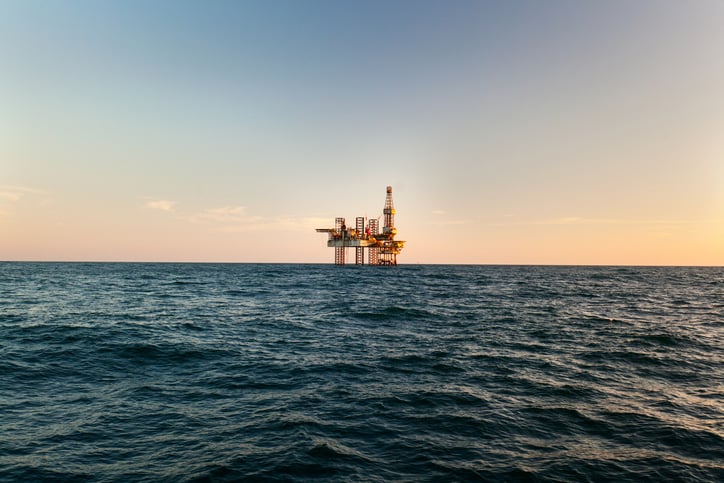
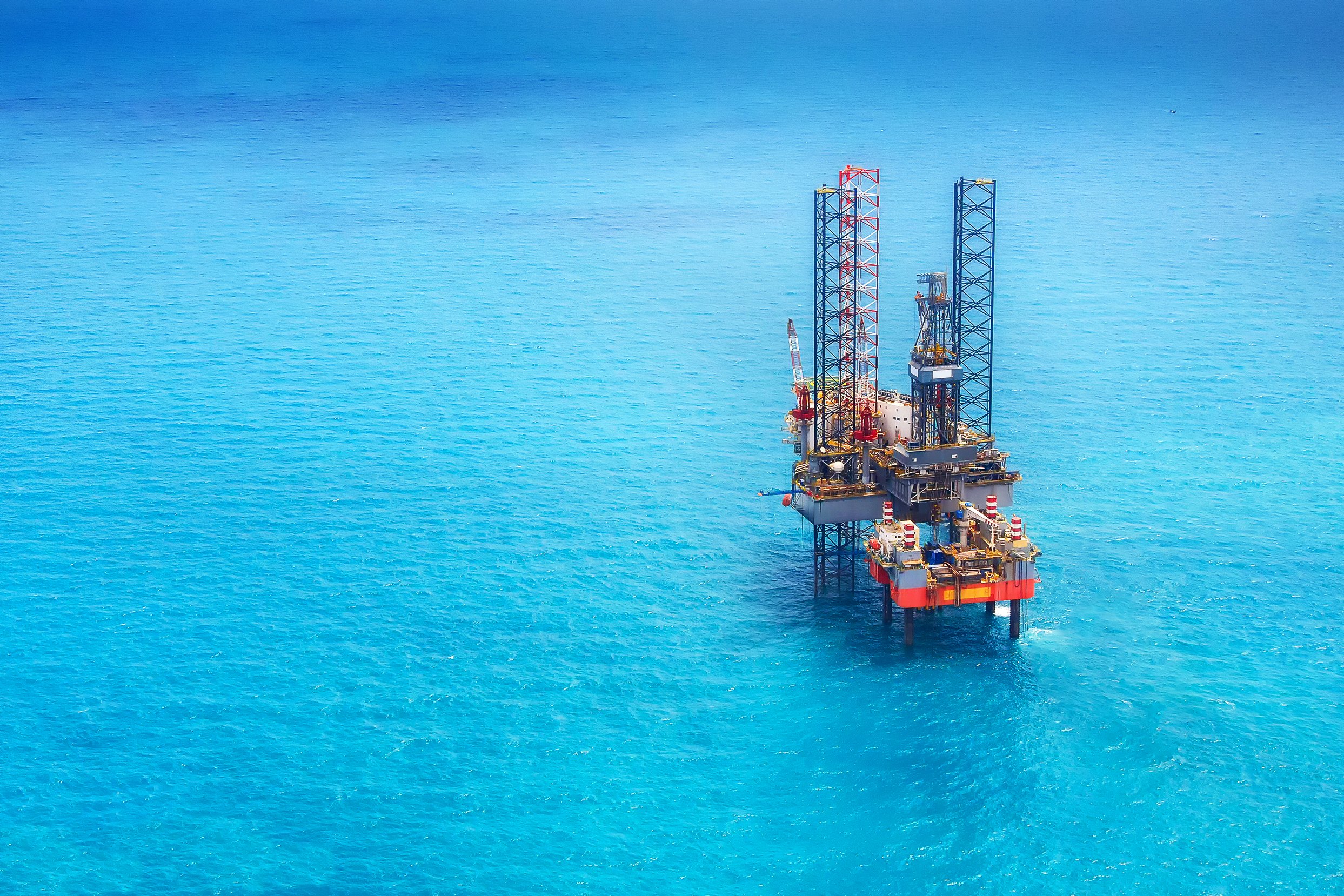
The Stabroek Block sits at the center of this growth story. OilPrice describes it as a prolific 6.6-million-acre offshore block, where an ExxonMobil-led consortium has made over 30 major discoveries.
The consortium structure matters because it shapes how projects get funded, approved, and executed. Reports show that ExxonMobil is the operator with a 45% working interest, while Chevron (via its acquisition of Hess) controls 30%, and CNOOC holds 25%.
Equally important: the resource scale. Exxon’s discoveries in the Stabroek Block are estimated to hold at least 11 billion barrels of crude oil. When you connect those data points, that’s massive acreage, repeated discoveries, large reserve estimates, and multi-project development and you get the underlying reason why offshore jobs in Guyana are expected to remain a long runway rather than a short hiring spike.
For context on earlier regional resource assumptions, the U.S. Geological Survey’s work on undiscovered oil and gas resources across Central and South America explicitly identifies the Guyana–Suriname Basin as a frontier province and discusses the broader Atlantic margin as a location where giant fields are mainly offshore.
Hiring demand follows project milestones. The development pipeline includes multiple producing facilities and several additional projects in progress. It reports that the consortium has developed four facilities: Liza Phase 1, Liza Phase 2, Payara, and Yellowtail, with additional projects at varying stages of development.
The Uaru facility is described as a $12.7 billion project with 250,000 barrels per day capacity, expected to come online late in the year (as of the March 2026 article).
Predictions say this would lift Guyana’s petroleum output to over 1.1 million barrels per day.
Whiptail is described as commencing operations in 2027, adding 250,000 barrels per day, lifting output to nearly 1.4 million barrels per day.
Hammerhead is described as coming online in 2029, adding 150,000 barrels per day.
Longtail is described as being in planning, with Exxon having submitted an environmental impact assessment study.
Additional projects under development are expected to push output to 1.7 million barrels per day by 2030.
For candidates and employers, this matters because multi-project pipelines create repeatable hiring needs, commissioning teams, marine and logistics expansions, maintenance programs, and operations staffing, driving steady growth in oil and gas vacancies in Guyana.
As offshore development scales, opportunities tend to cluster into predictable role families. In today’s Guyana market, demand commonly spans:
Engineering and Technical Disciplines
Engineering demand generally grows with both new project work and operating asset needs, especially in petroleum, mechanical, electrical, instrumentation, and subsea functions. As facilities expand, reliability and integrity roles become more critical to keep uptime stable and minimize unplanned outages.
Project Delivery and Project Controls
When multiple offshore projects are running in parallel, project coordination becomes a labor driver. Planning, scheduling, cost control, interface management, and procurement support roles rise in importance, particularly where supply chains must align with offshore windows.
Logistics, Marine, and Supply Chain
Offshore jobs in Guyana rely on a mature logistics ecosystem: personnel movements, equipment staging, marine coordination, and materials control. As production grows, the logistics footprint becomes more complex and staffing increases accordingly.
HSE, Environmental, and Compliance
Offshore development in a high-profile region increases scrutiny. That typically elevates HSE leadership, training, safety systems support, and environmental compliance. OilPrice’s mention of environmental impact assessment work tied to Longtail is one example of why environmental expertise becomes structurally important as the program expands.
Offshore work is fundamentally different from most onshore roles, regardless of country. Offshore jobs in Guyana commonly involve rotational schedules, strict safety requirements, and close-quarters living that demands strong teamwork and professional discipline.
drilling and well services
production operations
mechanical/electrical maintenance
marine support
safety and emergency response
catering and camp support services (for some offshore support environments)
For candidates, the practical takeaway is that offshore hiring tends to value: safety mindset, ability to follow procedures, and comfort operating in highly regulated environments. Take a look at our Relocation Guide to Guyana if you’re looking to relocate to this upcoming market.
Question: What should I expect from an offshore job in Guyana?
Short answer: Expect long hours and rotational schedules, weeks on followed by weeks off, alongside close-quarters living with shared facilities. Safety is paramount: companies enforce rigorous protocols and provide extensive training for emergencies. In return, offshore roles offer competitive compensation, fast-paced learning, and clear pathways for professional growth. View our relocating to Guyana guide for more insights.
Question: What types of oil and gas roles are available, and who are they suited for?
Short answer: Opportunities span engineering (petroleum, mechanical, electrical), project management, logistics and supply chain, and environmental management focused on sustainability. Offshore roles range from drilling engineers and safety officers to maintenance technicians and caterers. These positions suit candidates with technical qualifications or managerial strengths, plus strong teamwork, communication, and adaptability.
Question: What’s driving the surge in oil and gas vacancies in Guyana?
Short answer: The primary driver is the rapid expansion of ExxonMobil-led offshore development in the Stabroek Block, alongside a multi-project pipeline expected to lift national production materially over the next several years.
Question: Where should I look for offshore jobs in Guyana?
Short answer: A direct approach works best: start with our vacancies hub and follow our LinkedIn postings for timely role updates. https://www.brunel.net/en-us/jobs/oil-and-gas
Question: Why is the Stabroek Block so important?
Short answer: The Stabroek Block anchors Guyana’s rise as a major energy player due to its massive recoverable reserves. It is a 6.6-million-acre offshore block with over 30 major discoveries, estimated to hold at least 11 billion barrels of crude oil, making it one of the most consequential deepwater programs globally.
Guyana’s leadership has placed heavy emphasis on local participation and training as the sector expands, an approach echoed in broader analysis about the opportunities and governance risks that often accompany rapid resource-driven growth.
A policy-oriented perspective from the University of Navarra describes Guyana’s boom as a major economic shift while also highlighting the “resource curse” risk, where rapid hydrocarbon wealth can intensify corruption or inequality if governance and institutions do not keep pace.
For employers, this puts emphasis on compliant hiring practices, workforce planning, and training pathways. For job seekers, especially international candidates, it underscores the value of working with partners who understand local requirements and mobility logistics.
Educational institutions are crucial for workforce readiness. They offer specialized courses and certifications in oil and gas operations. Here are some priorities in workforce initiatives:
The focus on local content and development not only creates jobs but also fosters long-term economic growth. This approach paves the way for sustainable development and ensures that Guyana's citizens benefit directly from the oil and gas industry boom.
Finding oil and gas vacancies in Guyana requires strategic efforts. As the industry's demand for skilled workers rises, so do opportunities for eager job seekers. Staying updated with industry trends in the Guyana oil and gas industry is crucial for taking advantage of these opportunities. If your goal is to apply efficiently, especially for specialized offshore roles, your best strategy is to follow opportunities where they are posted consistently and where screening aligns with current project demand.
Instead of searching scattered job boards, go directly to our Oil & Gas vacancies hub, where roles are updated in line with active project needs. This approach is especially useful for candidates targeting offshore and project-based hiring cycles.
View Our Vacancies
We also post positions through LinkedIn, which is often where timely hiring updates show up first, especially when project demand changes quickly. Following our updates there helps you track new oil and gas vacancies in Guyana as they open.
Connect With Us on LinkedIn
For international professionals evaluating a move, relocation logistics matter as much as the role itself, work permits, housing, local conditions, and family considerations. Brunel’s guide outlines key relocation topics like visas/work permits, housing, and practical adjustments for oil and gas professionals moving into Guyana’s fast-developing market.
Guide to relocating to Guyana for oil and gase professionals
For many job seekers, a central question is whether Guyana’s hiring surge is durable. The combination of (1) large discovered resources, (2) multiple sanctioned projects, and (3) additional developments planned suggests that Guyana is not a short-term “boomtown” story, it is evolving into a long-duration offshore province.
If you want to track ExxonMobil’s broader corporate disclosures over time, the company’s investor portal provides access to official filings, including its annual report (10‑K). (That link is useful as a verification source for readers who prefer primary corporate documentation rather than secondary coverage.)
The expansion of the Stabroek Block has transformed the trajectory of the Guyana oil and gas industry, elevating the country into the front ranks of global offshore growth stories. With Guyana lifting 926,550 barrels per day by February 28, 2026, and with additional projects expected to drive output toward 1.7 million barrels per day by 2030, the employment market is being pulled forward by long-term offshore development rather than a short-lived cycle.
For candidates, the message is clear: the window for offshore jobs in Guyana is not limited to a single project, it is tied to a multi-year buildout of offshore production capacity. If you’re targeting oil and gas vacancies in Guyana, focus on roles aligned to active developments and operational staffing needs, and use our vacancies page and LinkedIn to stay ahead of the market.