
How Long Do Oil Rig Workers Work: Shift Patterns Explained
June 29, 2026
Oil and Gas

Oil and Gas
Quick Answer:
Oil rig workers follow one of the most structured and demanding schedules in any industry. Instead of a traditional workweek, offshore jobs run on continuous 24/7 operations that require long shifts and extended rotations. The industry standard is a 12-hour workday, split between day and night shifts to ensure round-the-clock production. Workers typically remain on-site for 14 to 28 consecutive days, depending on their rotation, and work every single day during that period.
These rotations, known as “hitches,” are balanced with equal or similar time off. The most common schedule is 2 weeks on, 2 weeks off, though variations like 3-on/3-off or 4-on/4-off are also widely used across global operations. Because of this structure, oil rig workers concentrate long hours into shorter timeframes. Over the course of a year, they typically work roughly half the calendar days but accumulate similar or slightly higher total hours than standard full-time roles due to consistent 12-hour shifts.
This schedule creates a unique lifestyle: intense, physically demanding work periods offshore followed by extended downtime at home, making oil and gas careers both challenging and highly rewarding.
Working in the oil and gas industry is unlike any other profession on earth. Oil rig workers do not have regular nine-to-five jobs, they work in distant places and face tough conditions.
If you’re considering a career in oil and gas or just curious about the lifestyle, you’ve probably wondered: how long are oil rig shifts? Closely related, many also ask “how long do oil rig workers work” during a typical hitch, and across a full year. Oil rig work is demanding and highly structured, with strict schedules that keep operations running 24/7. To fully understand what that looks like, it helps to break down daily routines, rotations, and life offshore.
Let's break down exactly what an oil rig work schedule looks like, how workers manage their time, and what it takes to succeed in this challenging environment.
Oil platforms never sleep. Extracting oil and gas is a continuous process, which means the facility requires constant supervision and manual labor. To accommodate this, operations are divided into distinct daily shifts.
The undisputed industry standard is the 12-hour oil rig workday. Whether you are a roughneck, a drill operator, or an offshore installation manager, you will almost certainly be working 12 hours on, followed by 12 hours off.
These oil rig hours are usually split into two categories:
Shift handovers are a critical part of the day. Workers usually arrive 15 to 30 minutes early to be briefed by the outgoing crew about current operations, safety hazards, and equipment status.

One experienced field worker with four years in the oil and gas industry offered a candid look at what shifts are truly like. While there’s often a lot of talk about long hours, not all of it reflects reality.
According to his experience, much depends on the specific service being performed. For example, teams working in onshore hydraulic fracturing and wireline operations often have alternate responsibilities. When everything runs smoothly, workers might get short breaks between tasks, sometimes around 30 minutes. However, if issues arise, such as equipment delays, deeper wells, or operational setbacks, those breaks can quickly stretch into hours or disappear entirely.
Most shifts are structured around 12-hour rotations, yes, but real-world conditions can blur those boundaries. In some cases, workers may complete a full shift only to face extended operations due to scheduling overlaps or delays in relief crews.
More extreme scenarios can occur when unexpected problems arise. Equipment failures or operational challenges may require workers to stay on-site far beyond their scheduled hours, sometimes working continuously until additional support arrives. These situations, while not the norm, highlight the demanding and unpredictable nature of the job.
The overall experience tends to fall into two distinct categories: much of the time involves waiting, monitoring systems, and maintaining readiness. But when things go wrong, the work can become intense, high-pressure, and physically and mentally exhausting, often requiring long hours with little rest.
Understanding the daily 12-hour grind is only half the equation. The broader oil rig work schedule is based on rotation cycles, commonly referred to in the industry as "hitches."
During offshore drilling crew hitches, workers live and work on the platform for a set number of weeks, followed by a set number of weeks resting at home. Because traveling to deep-sea platforms is expensive and logistically complex, daily commuting is impossible.
So, how long do oil rig workers stay at sea? It largely depends on the company, the region, and the specific role, but typical offshore rotation cycles include:
During their hitch, crews work every single day. There are no weekends, no public holidays, and no "sick days" for minor ailments. This means a worker on a standard 14-day hitch will work 14 consecutive days on oil rigs, totaling 168 hours of labor in just two weeks.
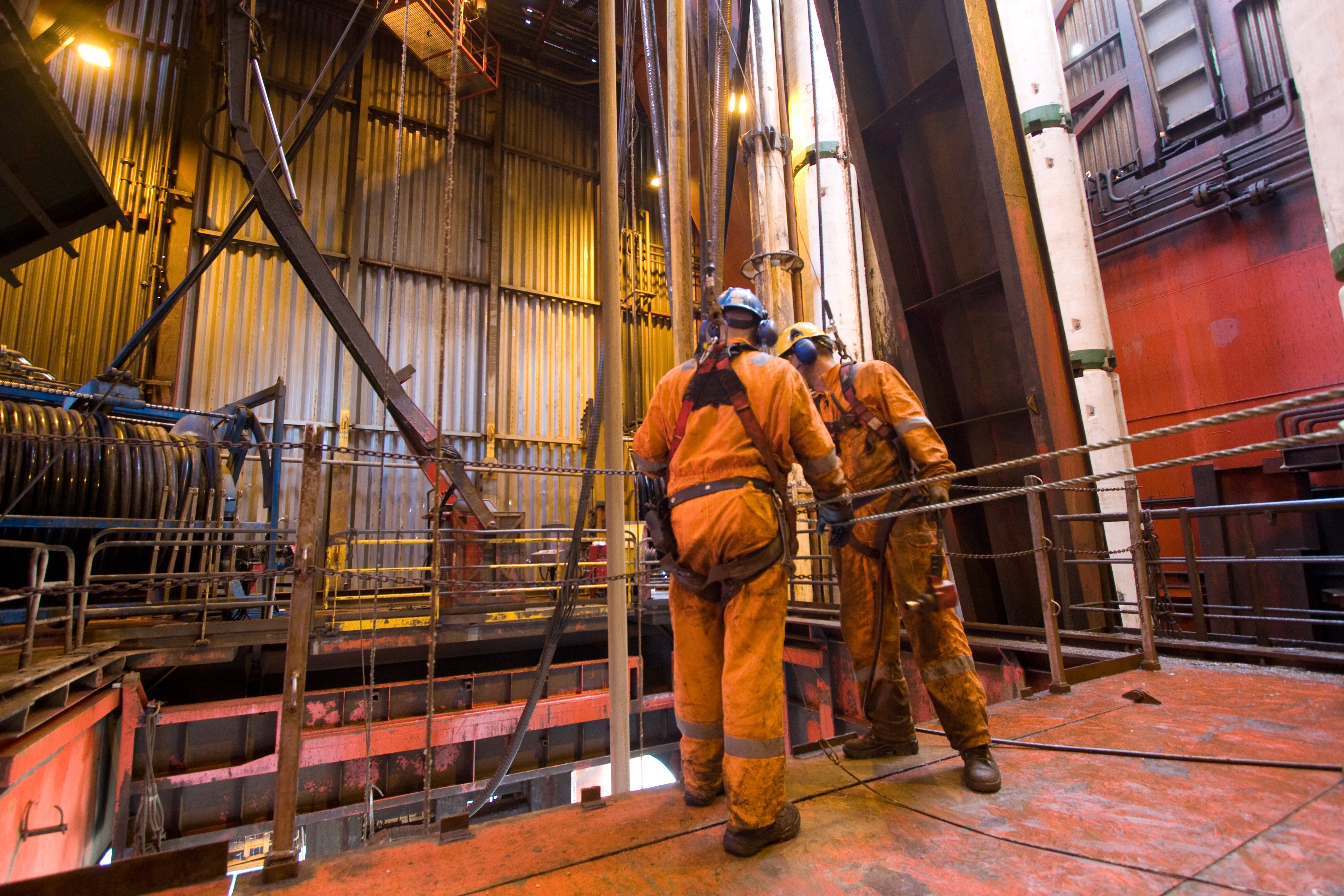
When looking at the math, how long do oil rig workers work over the course of a full year?
If a worker is on an equal rotation (like a 2-on-2-off or 4-on-4-off schedule), they effectively only "work" for six months out of the year. How long do oil rig workers work a year in terms of pure hours?
14 days x 12 hours = 168 hours per hitch (two weeks).
Working 6 months (approx. 182 days) x 12 hours = 2,184 hours per year.
For context, a standard onshore 40-hour workweek yields about 2,080 hours a year. Rig workers squeeze slightly more hours into half the days, resulting in vast stretches of uninterrupted free time. Because of this structure, standard offshore oil rig leave entitlement is essentially baked into the rotation, your "off" weeks are your vacation.
Working a 12-hour shift on an active drill floor is physically and mentally taxing. To truly understand the schedule, it helps to look at the practical reality of the job.
A roughneck is the backbone of the drilling crew. The daily tasks of a roughneck are labor-intensive and include:
Because this work is so exhausting, downtime is sacred.
Adjusting to the 24/7 noise and vibration of a drilling platform takes time. Oil rig worker sleep patterns can be easily disrupted, especially for those transitioning between day and night shifts.
Fortunately, companies heavily invest in offshore platform accommodation standards. Modern rigs feature:

Because these platforms are situated miles out in the ocean, getting to work is an adventure in itself.
The industry relies heavily on helicopter transport for crew changes. At the start of a hitch, workers gather at an onshore heliport, undergo a safety briefing, don heavy immersion suits, and fly out to the platform.
Bad weather can sometimes delay these flights, meaning workers might occasionally spend an extra day or two on the rig waiting for the fog to clear or a storm to pass.
While offshore work is famous for its strict rotations, onshore oil rig employment functions slightly differently.
When looking at onshore vs offshore shift duration, the daily hours are usually the same (the 12-hour shift remains standard).
However, the rotation cycles are often vastly different. Onshore workers might work a "14 on, 7 off" schedule or even operate on a somewhat normal Monday-to-Friday schedule if the rig is close to a major town.
Because onshore workers can often drive home or back to a local "man camp" (worker housing) at the end of their shift, the extreme isolation of offshore hitches is mitigated, though the physical labor remains just as demanding.
The unique schedule of an oil rig worker is a double-edged sword. On one hand, having six months of the year completely off is a massive benefit. On the other hand, being away for weeks at a time presents distinct challenges.
Working 14 to 28 consecutive 12-hour shifts can drain a person mentally and physically. Managing oil field worker burnout is a major focus for modern energy companies. Safety departments emphasize the "Stop Work Authority" (the right of any worker to halt operations if they feel unsafe or too fatigued).
Workers are encouraged to utilize rig gyms, eat healthy meals, and maintain a strict sleep schedule to protect their mental health.
The impact of rig schedules on family life is one of the hardest adjustments for new workers. Being offshore means missing birthdays, anniversaries, and school plays.
However, the flip side is that when a rig worker is home, they are truly home. They don't bring work home with them, and they are available 24/7 for their families during their off-weeks. For many families, this intense, high-quality bonding time makes the absences worthwhile.
Question: How are sleep, rest, and well-being managed on offshore rigs?
Question: How long are oil rig shifts, and how are they structured?
Short answer: The industry standard is a 12-hour workday, every day of your hitch. Crews split into day shift (often 6:00 AM–6:00 PM) and night shift (the opposite 12 hours) so the rig runs 24/7. Workers typically arrive 15–30 minutes early for handovers to get briefed on ongoing operations, safety issues, and equipment status.
Question: How many hours do oil rig workers typically work in a year, and how does time off work?
Short answer: On equal rotations (e.g., 2-on-2-off or 4-on-4-off), workers effectively work about six months of the year. In hours, that’s roughly 2,184 hours annually (about 182 working days × 12 hours). Time off is built into the rotation, your off-weeks function as your leave or vacation.
Question: What are typical offshore rotation cycles, and how long do workers stay at sea per hitch?
Short answer: Rotations (hitches) vary by company, region, and role, but common patterns include 2 weeks on/2 weeks off (most common), 3 on/3 off or 4 on/4 off in remote areas, and sometimes uneven rotations like 2 on/1 off for specialized contractors. During a hitch, you work every single day, no weekends or holidays, so a standard 14-day hitch equals 14 consecutive 12-hour shifts, or 168 hours.
Question: Why do people accept such demanding schedules, and what protections are in place?
Short answer: Pay is a major draw, long hours and overtime (often built into day rates or premiums) make even entry-level roles well-compensated, while specialized positions can reach six figures. Strong regulations protect workers, too. Maritime labor laws (e.g., the Jones Act in the U.S. and European working time directives) enforce rest periods, cap work at 12-hour shifts, and mandate adequate medical care and safe transit.
Why do people choose to endure these grueling schedules and long periods of isolation? The primary motivator is financial.
The pay rates for long oil field hours are highly competitive. Because workers put in heavy overtime (anything past standard weekly hours is often calculated into their day rate or paid as a premium), entry-level positions often pay significantly higher than equivalent land-based jobs, while specialized roles can easily fetch six-figure salaries.
Furthermore, workers aren't left to the mercy of their employers. Heavy regulations protect crew members. Maritime labor laws for oil workers (such as the Jones Act in the US, and specific maritime working time directives in Europe) strictly govern rest periods. These laws ensure that the 12-hour work limit is respected and that workers receive adequate rest, proper medical care, and safe transit.
So, how long are oil rig shifts, and how long do oil rig workers work? They are undeniably long, demanding 12 hours of intense focus per day, sustained over weeks of continuous work.
However, the reward for this grueling schedule is substantial. With typical hitches like the 2-on-2-off rotation, workers gain an unprecedented amount of free time, excellent financial compensation, and the camaraderie that only comes from living and working closely with a dedicated crew.
For those considering oil rig employment, understanding the physical and mental demands of the schedule is the first step. It requires resilience, adaptability, and a strong work ethic. But for those who can master the rhythm of the rig, it offers a deeply rewarding and uniquely flexible career path that few other industries can match.
Location: Kitimat
hrs a week: 40 hrs a week
Closing: January 06, 2027
Location: Pickering
hrs a week: 40 hrs a week
Closing: January 06, 2027
Location: Kitimat
Closing: December 20, 2026
Location: Guelph
Closing: December 15, 2026