Silicon and semiconductor chips: powering AI and the IT industry
31 October 2024
Technology
Technology
We live in the digital age, and silicon and semiconductor chips are powering that age. Their presence is now ubiquitous and inescapable, seen everywhere from smartphones to large-scale data centres. As we continue to get more and more digital, the need to understand the various categories, manufacturing processes, and implications of these chips cannot be understated. In this blog, we take a closer look at how semiconductor chips are made and used in the IT industry and in artificial intelligence.
"Silicon chips are now fundamental to modern life, incorporated into every facet of electronics, and vital to power the exponential growth in a world weaning itself off fossil fuels." - ABC News
Almost everything we interact with daily, from our household appliances to complex AI systems, is powered by silicon. The journey of silicon from raw material to technology begins with high-purity quartz (HPQ). High-purity quartz is used to make fused-quartz crucibles, which are fundamental to chip-manufacturing because they can withstand the blistering heat needed to melt silicon.
In the manufacturing process, quartz crucibles are filled with melted silicon, and a silicon seed crystal is dipped into it, gradually growing into large ingots—solid silicon blocks that can weigh over 500kg. These ingots are then sliced into thin wafers, which form the base for modern computer chips, allowing for the complex circuits that power AI and advanced technology.
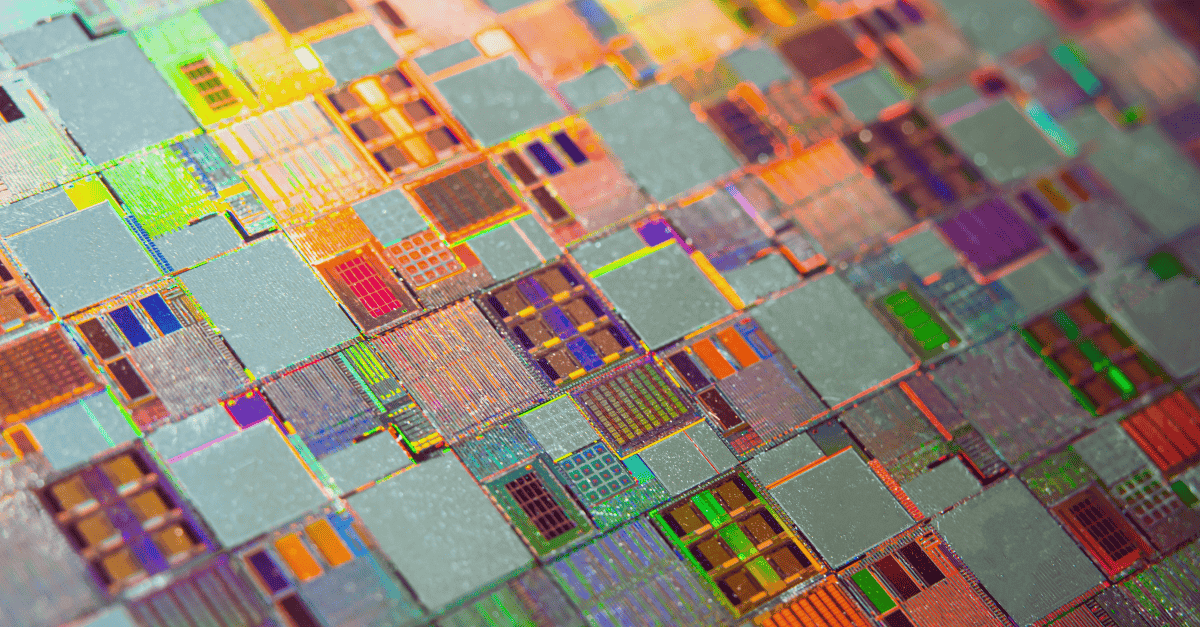
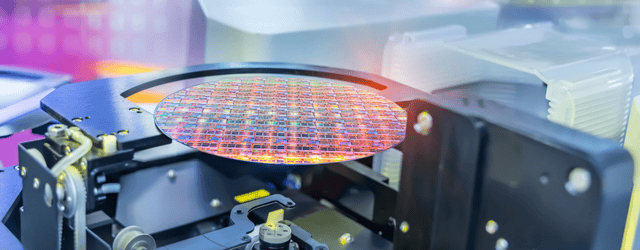
Once the silicon wafers are ready, they go through photolithography, where a light-sensitive layer is applied, and UV light shines through a patterned mask to mark out the circuit paths. Chemicals then etch these paths, creating the foundations of each chip’s circuitry.
From there, the wafer is layered with different materials and heated to build up the circuit’s complexity, forming tiny transistors and connections. After multiple rounds of this, the wafer is cut into individual chips, each one tested to ensure quality. Finally, the good chips are packaged and prepped for integration into devices, ready to power everything from phones to high-performance computers.
Semiconductors are fundamental for electronics, powering a multitude of everyday devices. They can be classified based on functionality into four primary categories:
Memory Chips
Memory chips are designed to store data temporarily or permanently. They are essential for the operation of computers and other electronic devices, providing the necessary space to hold information during processing. The two main types of memory chips include:
Volatile memory: Loses data when power is off. Examples include dynamic random-access memory (DRAM) and static random-access memory (SRAM).
Non-volatile memory: Retains data even without power. Examples include read-only memory (ROM), flash memory, and solid-state drives (SSDs).
Microprocessors
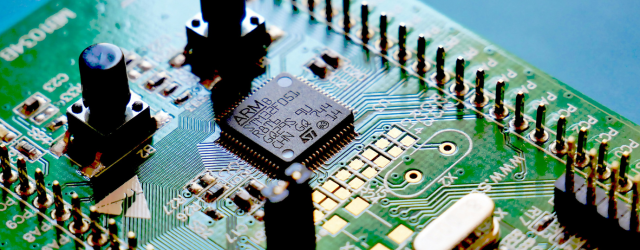
Microprocessors, as the CPU of a computer or device, executes instructions from software and performs calculations. They are often referred to as the “brain” of electronic systems. Key features of microprocessors include:
Architecture: Different architectures, like x86 or ARM, determine their processing instructions.
Clock speed: Affects the performance and speed at which they process data.
Core count: Multi-core processors can handle multiple tasks at the same time.
Standard chips
Standard chips, referred to as standard logic devices, have specific functions in circuits:
Complex systems-on-a-chip (SoCs)
SoCs integrate different components, including processors, memory, and peripheral interfaces, onto a single chip. This design offers several advantages:
In addition to functionality, semiconductors can also be grouped by types of integrated circuitry, which include:
Digital integrated circuits
Digital ICs process binary data (0s and 1s) and are used in applications that require precise control and manipulation of data. They are fundamental to:
Computing devices: Including microprocessors and memory chips.
Logic devices: Used in various digital applications, from simple calculators to complex computers.
Analog integrated circuits
Analog ICs handle continuous signals and are crucial in applications that require the processing of real-world data. They are commonly found in:
Audio equipment: Amplifiers and signal processing devices.
Sensor interfaces: Converting signals from sensors into a format suitable for digital processing.
Mixed-signal integrated circuits
Mixed-signal ICs combine both analog and digital functions on a single chip, enabling seamless interaction between the two. These are vital in applications such as:
Telecommunications: Modems and radio-frequency applications.
Consumer electronics: Devices that require both analog input (e.g., audio signals) and digital processing (e.g., smartphones).
Each type of semiconductor meets specific needs in electronic devices and requires tailored manufacturing processes to ensure optimal performance. Advances in semiconductors continue to drive innovation across industries, resulting in smarter, faster, and more efficient electronic systems.
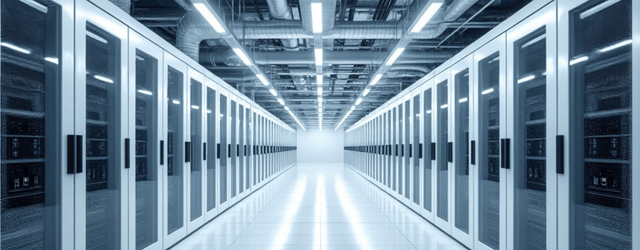
The evolution of AI is closely tied to advancements in semiconductor manufacturing. NVIDIA, which is soon to beat out Apple for the title of company with the highest market cap in the world, recently announced its partnership with xAI, supplying their Colossus supercomputer cluster with 100,000 NVIDIA Hopper GPUs. Colossus, the largest AI supercomputer in the world, is being used to train large language models.
In September, Elon Musk, who founded xAI, stated on X “Colossus is the most powerful AI training system in the world. Moreover, it will double in size to 200k (50k H200s) in a few months.”
This forecast by the tech mogul is indicative of the demand for powerful computing resources, all made possible through sophisticated silicon chips. And, this demand is expected to only keep rising in the future.
"Australia has abundant HPQ deposits from various geological sources, positioning it as a potential key supplier...With a global shift towards clean technologies, there is a significant opportunity for Australia to enhance its silicon production capacity and become a leader in HPQ supply and production through further investment and exploration." The Australian Journal of Earth Sciences.
Australia’s position in the global silicon market is promising; with rich deposits of HPQ and an opportunity to enhance its silicon production capacity, Australia could become a global leader in the supply and production of silicon.
With global demand for silicon soaring, particularly to power renewable energy and AI technologies, Australia is fully capable of making use of its vast resources to become a major supplier. More, its proximity to tech-driven markets in Asia, such as Japan, South Korea, and China, provides a logistical advantage, allowing for faster and more cost-effective exports to high-demand areas.
The relevance of silicon and semiconductor chips in the IT industry cannot be emphasised enough. As we embrace more advanced technologies and AI solutions, the demand for these components will only grow. Understanding their categories, the manufacturing process, and the broader implications for industries such as clean technology will be crucial for navigating the future of technology.
Brunel's technology experts can connect you with the skilled infrastructure, operational technology and connectivity specialists your business needs to thrive.