
Floating to the Future: The Rise of Offshore Wind
October 10, 2024
renewable energy
renewable energy
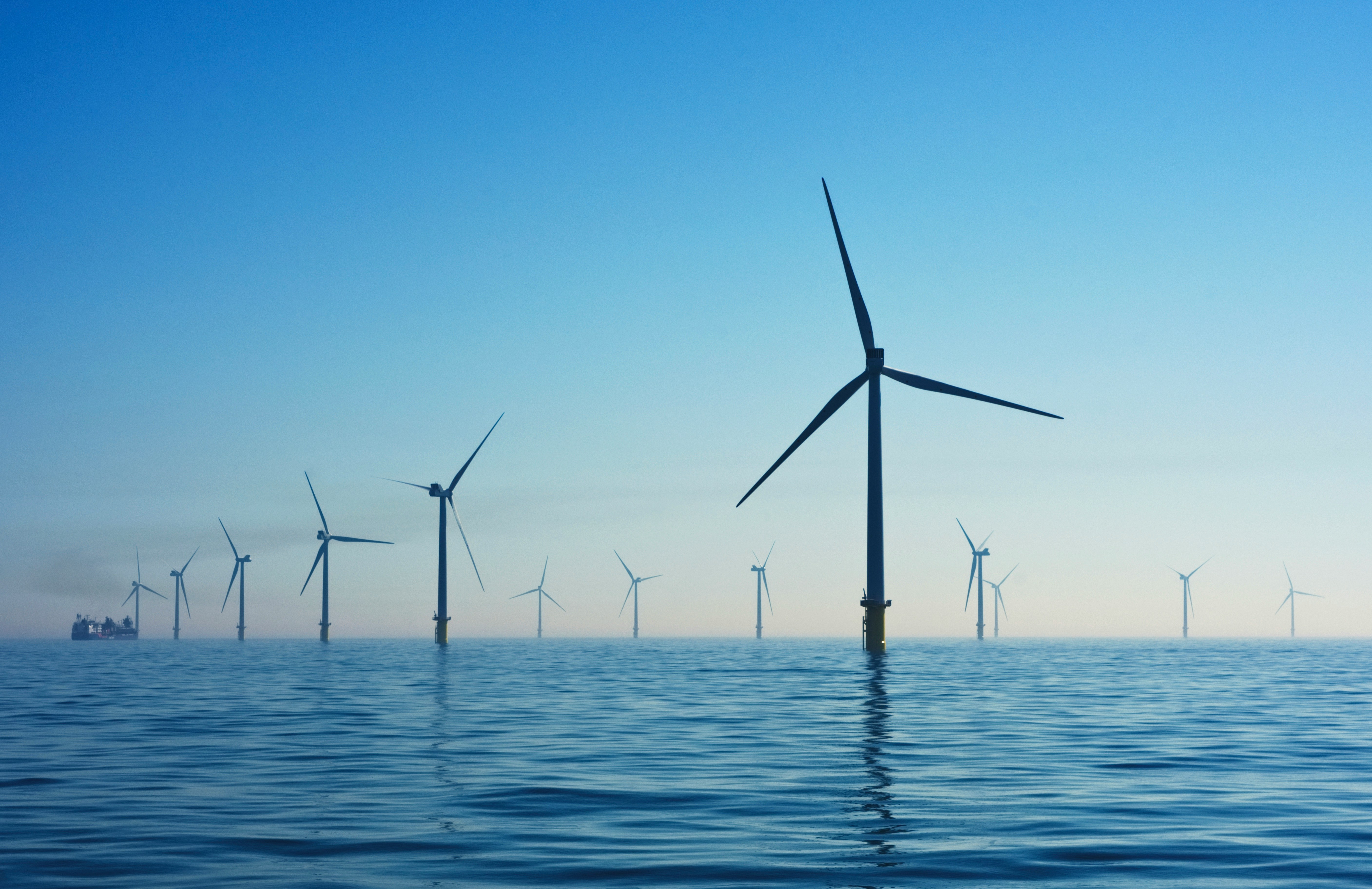
Floating wind turbines are, on a basic level, exactly what they sound like. As opposed to fixed-bottom turbines, which rely on contact between the seabed and a foundation structure, floating turbines rely on waterborne platforms of different types to remain stable. They are typically tethered to the seabed with cables which ensure stability while also allowing them to move with the swells of the sea to prevent damage. Like fixed-bottom turbines, the current they generate travels through subsea cables back to the grid.
The primary benefit of this technology lies in the power generation potential of ocean winds. Offshore wind speeds are consistently much higher than onshore, where they face more friction from natural and artificial obstructions such as mountains, trees, and buildings. While technically viable offshore turbine sites have a yearly average wind speed threshold of 7 m/s (at a 100-metre elevation), we still find that ocean winds in key project areas regularly exceed this amount, climbing as high as 11 m/s.
Stronger winds mean more rotational force, which allows offshore turbines to generate electricity more efficiently than onshore turbines relative to their size. But this benefit is true of offshore wind technology generally, not just floaters. So, why choose them when building a project?
According to analysis carried out by the Energy Sector Management Assistance Program (ESMAP), 115 countries share a technically extractable offshore wind resource of just over 71,000 GW. Various regions across the continents have pushed hard to seize on this potential, including but not limited to Scandinavia, the UK, USA, and Taiwan, all of which continue to pursue ambitious offshore wind capacity goals despite ongoing regulatory and supply chain challenges.
However, only around 20,000 GW of that total potential is suited to fixed-bottom turbines, which typically are only viable in water up to 50 metres deep. In developing a region’s offshore wind industry, poor seabed conditions and water depth are the biggest hurdles to overcome. This is exemplified by the cases of California, which has a seabed consisting of a complex arrangement of highly turbulent water masses, and Japan, which is at a geographical disadvantage due to its coastal water depth featuring sheer drops immediately offshore and frequent earthquakes.
This is why the rest of the world’s untapped wind resource will need to be captured with floating offshore wind turbines. From a materials perspective, they are limited by the length and strength of tethers rather than enormous monopiles, jacket, and tripod structures, opening the door to deepwater wind farms situated past water depths of 50 metres: even down to 200 metres or beyond.

Floating wind foundations are the key differentiator between turbine platform types, with a variety of designs built around two central stabilising mechanisms: ballast and buoyancy. Reliance on buoyancy is of course essential for all floaters, as the upward pressure exerted by the water on the immersed structure must be enough to keep it from sinking, but the way that stability is ultimately achieved is where these mechanisms differ.
In buoyancy systems, reserve buoyancy, which is the excess of buoyant force over the weight of the turbine and foundation, serves to keep the tethers under tension. Typically, the floating structure itself does not contain permanent ballast and is designed to be light and use less steel. Tension Leg Platforms (TLPs), for example, are highly stable, but their vertical and rotational stiffness under large dynamic loads can lead to tether damage.
Ballast is the weight added to the structure to increase its stability or modify its position. By placing significant amounts of ballast at the base of the floating platform, engineers can adjust the turbine’s centre of gravity to a lower level relative to the centre of buoyancy. This carefully planned distribution of weight enhances the structure's stability and reduces the chance of it overly pitching or rolling in the water. Semi-submersible and especially spar-buoy platforms extend more deeply into the water and use ballasts to resist wave and wind forces, and are generally lower cost than TLP, but semi-submersibles are the cheaper and more popular option as they can work in any water depth beyond 40 metres.
Foundations aside, inside the nacelle, a floating turbine is no different to its equivalents: it turns rotation into electricity with gears and a dynamo. But floaters bring with them other technological considerations related to their mooring systems and power transmission infrastructure such as cables and substations.
Where substations are concerned, the exploration of floating substations is ongoing, and will be required to scale their turbine counterparts by bolstering projects’ transformation and distribution capabilities. These more complex systems will require more cabling, but unlike fix-bottomed equivalents, subsea cables used in floating wind installations lack the inherent protective ‘shell’ offered by a grounded structure, meaning they must be shielded with sealing layers, insulation, and protective armouring. However, just 8% of cable failures result from external damage. The majority are due to manufacturing defects and hotspots at connections between components.
Mooring systems also introduce complex requirements. Drag embedment anchors, suction piles, gravity bases, and driven piles are some of the anchoring options available, with the optimal solution depending on project requirements and seabed conditions. Tethers themselves must also strike a delicate balance between flexibility and strength, while being resistant to the highly corrosive combination of salinity and deep-sea turbulence to stay intact and minimise environmental impact. For these varied purposes, strong synthetic fibres have been developed and are in use on projects around the world.

The materials used in floating offshore wind turbines are largely the same as other turbines: steel, copper, aluminium and plastics for nacelles and towers; carbon fibre, glass composites, and epoxy for blades; and often, concrete for foundations, whether floating or fixed. The amount of material is where things may differ.
The scale of fixed-bottom turbines has been growing extremely quickly, as OEMs (Original Equipment Manufacturers) compete to build larger and larger turbines with higher power ratings — which has sparked some concerns around quality and failure risks which could be ignored over the course of this ‘arms race’. Floating wind platforms lend themselves to (relatively) smaller, standardised turbines, owing to the limitations of standardised foundation structures, but this might actually be a benefit. Standardisation across the industry enables components to be replaced when necessary, increasing the overall longevity of projects and lowering their material cost.
However, an established supply chain is needed for this kind of commercial-scale deployment. Support from the maritime sector backed by government incentives is critical for its successful implementation: not just from offshore wind vessels that are able to dock at floating turbines to transfer O&M technicians, but from ports, which must provide the necessary portside infrastructure to enable installation, such as jack-up winches.
Monitoring systems are essential for floaters, providing streams of crucial data to ensure safety and efficiency over their operational life. They help detect and address issues promptly, allowing for preventive maintenance and operational adjustments in the face of challenging marine conditions. Sensors and automation help operators to overcome the difficulties of accessing turbines which are located much more remotely, and timing maintenance trips to waste as little time, money, and energy as possible.
Monitoring systems are also needed to address the perception of risk by offering concrete evidence of the technology's resilience and performance. They facilitate improvements and compliance with industry standards, as well as access to project insurance — all vital steps towards establishing trust as the industry expands to new heights.
Projections show the world will reach a cumulative floating offshore wind energy capacity of almost 40GW in 2030, with the United Kingdom, Italy, and Sweden leading the market. At first glance, today’s farms tell a different story: Equinor’s Hywind Tampern farm is the biggest operational floating offshore wind farm, with 88MW of capacity, followed by the 50MW Kincardine Offshore Windfarm delivered by Cobra Wind.
In the face of the multi-gigawatt fixed-bottom farms of today, these numbers may seem small — but they are forecast to grow suddenly. Many projects in the pipeline are still to come, and with exponentially more people taking up renewable energy jobs across the market, they will be realised quickly. By 2030, it’s likely we will see the first utility-scale floating wind farms operational across the world.
Some notable project plans currently underway include those of the local government of Ulsan City in South Korea, which is pursuing the construction of an ambitious 6GW floating farm by 2030, employing approximately 210,000 workers. Vargronn’s planned Green Volt and Cenos windfarms off the coast of Scotland, totalling 1.9GW, will counteract emissions in the oil & gas industry and create around 8,000 jobs locally. And in California, a potential 4.6 GW of floating wind off the Morro Bay and Humboldt Bay areas could create nearly 175,000 jobs.
The market for specialists in the offshore wind sector is a highly promising one. Given the diversity of technological, digital, logistical challenges offshore wind development faces, combined with its increasing global demand, opportunities for new starters and those looking to boost their careers in renewables are plentiful. Some of the jobs on offer include:
Client Representatives represent the client or owner’s interests throughout the various phases of an offshore wind project, including construction, installation and operation. They serve as a crucial link between the offshore site and the onshore offices, ensuring effective communication and reporting of the client’s standards and expectations.
Joshua Whitaker, Head of Recruitment at Taylor Hopkinson, South Korea, states, “Many of our offshore wind vacancies in South Korea focus on the development, pre-construction and engineering, as the leading companies ramp up detailed plans to get their projects into the water. We’re looking for Project Managers, Consenting Managers, grid specialists – all important technical specialist roles that are crucial for the deployment and execution of these massive infrastructure projects”.
Demand for renewable energy worldwide is accelerating at a rapid pace. Renewable energy innovations like floating offshore wind turbines are opening new paths through the energy transition, allowing countries around the world to harness the natural power of the wind in regions previously inaccessible. At the same time, more and more new paths into this emerging industry are appearing, with new careers related to every technical, non-technical, executive, legal, administrative, and regulatory aspect of the process.
Are you looking for an exciting career in renewables? Browse through our job offers.