Iron ore: the backbone of steel and civilisation
2026-03-19T00:00:00Z
Mining

Mining
Iron ore might not be a household term, but its influence is everywhere – from the skyscrapers that shape our cities to the cars we drive, bridges we cross and tools we use daily. As the resource used to create steel, iron ore literally builds the world around us. But what exactly is iron ore, where does it come from, and who are the people and professions powering this enormous global industry? From geological formation to mega-mine operations and global export, iron ore’s pathway involves sophisticated science, engineering logistics and an entire ecosystem of skilled professionals.
FAST FACTS

At its core, iron ore is a rock or mineral from which metallic iron (Fe) can be economically extracted. Iron itself is the fourth most abundant element in the Earth’s crust, making up close to about 5% of the planet’s outer layer – but rarely in a pure form that’s directly usable without processing. Instead, iron is bound with oxygen and other elements in minerals like hematite (Fe₂O₃) and magnetite (Fe₃O₄), which are the main types of iron ore mined worldwide.
There are four broad types of iron ore deposits commonly worked:
The quality and composition of these ores vary, affecting how it’s processed and its path to becoming steel.
Almost all iron ore ends up as steel. Approximately 98% of the iron ore mined globally is used to make iron that becomes steel, a material central to modern life. Why steel? Because by combining iron with a small amount of carbon and other elements, we get a material that is:
Steel becomes the backbone of industries as diverse as:
Different types of steel – from corrosion-resistant stainless steel (blended with chromium and nickel) to high-strength automotive steels – are each tailored by adjusting iron’s alloy make-up.
Beyond steel, iron compounds have niche applications in industrial processes, pigments and chemicals. However these represent a very minor fraction of total iron ore demand.
Iron ore is mined on every continent except Antarctica, but the bulk of production is concentrated in just a handful of countries. According to geological surveys, iron ore is mined in roughly 50 countries, but the top producers account for three-quarters of the global output.


The world's largest producers of iron ore are:
Western Australia’s Pilbara region is the global hotspot for iron ore. Boasting an estimated 55 billion metric tonnes of iron ore reserves, the Pilbara is home to a vast collection of open-pit mines operated by major miners like Rio Tinto, BHP, Fortescue, Hancock Iron Ore and Mineral Resources.
Some well-known Australian iron ore mines include:
These mines are connected to ports via heavy-haul rail lines that ship ore to global steelmakers, particularly in East Asia.

Brazil is one of the world’s most significant iron ore producers and home to some of the most extensive deposits on the planet. The country’s mining heartland sits largely in the states of Pará and Minas Gerais, where vast ore bodies have supported iron ore production for more than a century. Brazil is also home to Vale – the world’s third largest mining company.
One of Brazil’s most famous mining regions is the Carajás complex in northern Pará which is often described as one of the highest-grade iron ore deposits in the world. These operations are characterised by large-scale open-pit mines, long-distance rail corridors, and deep-water ports that connect Brazilian ore to steelmakers across Asia and Europe.
The country’s mining sector supports a huge workforce of engineers, geologists, environmental professionals, equipment operators and logistics specialists, making it one of the most dynamic employment hubs in the global resources industry.

While China is a significant iron ore producer in its own right, its real influence lies in its position as the world’s largest iron ore consumer. The country’s rapid industrialisation, urban expansion and infrastructure growth over the past few decades have driven unprecedented demand for steel – and by extension, iron ore.
China’s domestic iron ore deposits are spread across several provinces, including Hebei, Liaoning, Sichuan and Shanxi, but many of these ores are lower-grade and subsequently more complex to process. As a result, China relies heavily on imported iron ore from countries such as Australia and Brazil to feed its enormous steelmaking sector.
Chinese steel mills sit at the centre of global iron ore demand, shaping prices, shipping routes and investment decisions worldwide. This has made China not just a consumer, but a key strategic player in the iron ore ecosystem – influencing everything from mine expansion projects to port infrastructure and decarbonisation technologies. For professionals across mining, processing, logistics and materials engineering, China’s steel industry continues to be a major driver of innovation and employment.

Mining iron ore is a capital-intensive, high-volume business. Unlike the mining of many other resources which involve extracting small amounts of precious materials, iron ore mining is about moving mountains of rock efficiently. The two primary methods of mining iron ore are 1) Open-pit mines, and 2) Underground mines.
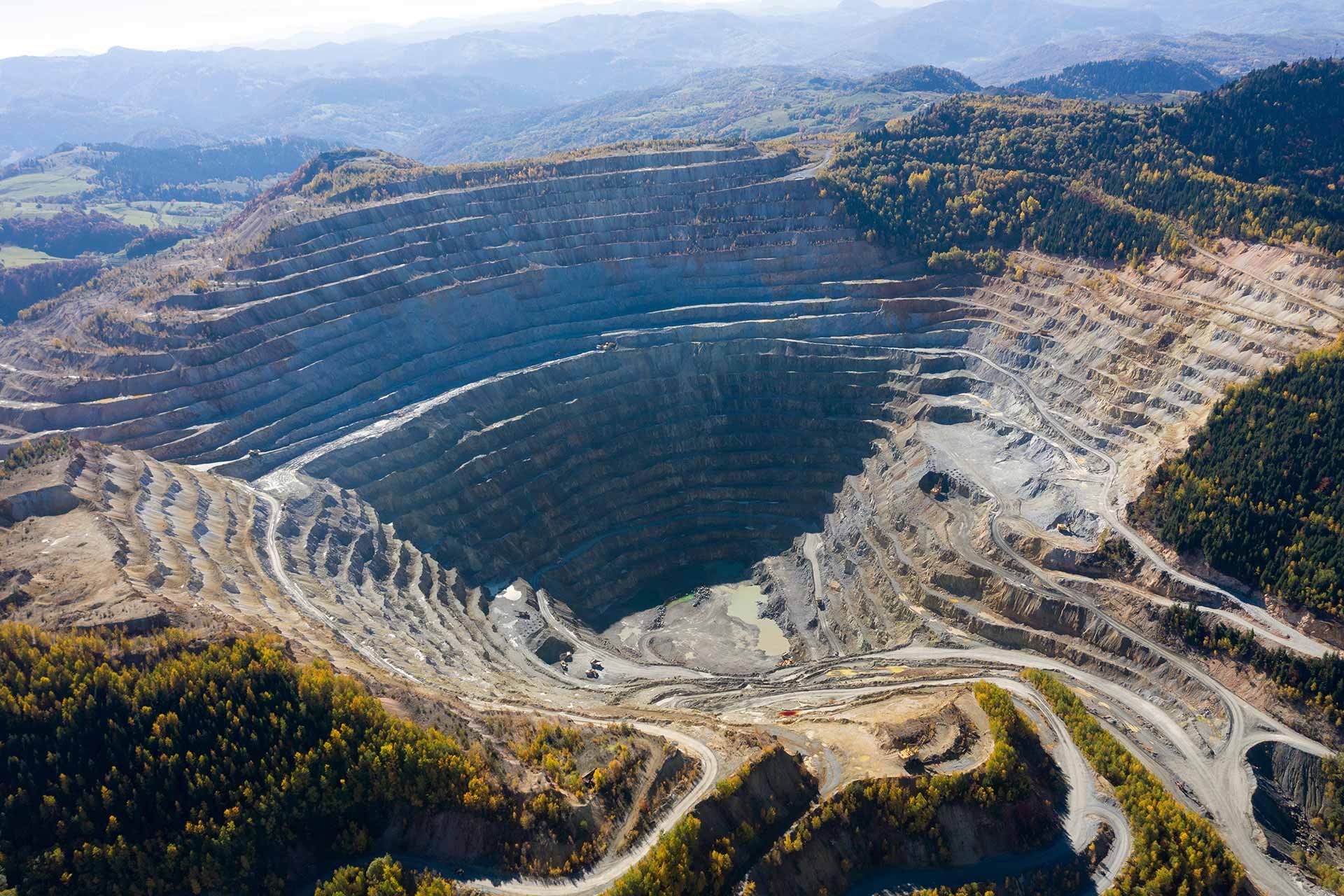
This is the dominant method for iron ore today. Big, surface-lying deposits are extracted using heavy machinery. The steps include:
Open-pit operations dominate because they’re safer, cheaper per tonne and can handle the enormous volumes required.

While less common for iron ore, underground methods are used where surface ore isn’t of high enough quality or accessibility. These involve tunnels, shafts and more complex logistics.
Once ore reaches a processing plant, it’s typically:
From there, these pellets feed blast furnaces or direct reduction plants in steel mills, where iron is extracted and transformed into molten iron and then steel.
Iron ore mining is far more than digging dirt – it is a complex, interconnected set of activities requiring a diverse range of skills. Careers span the entire lifecycle from exploration to export, processing to engineering. Some of the key disciplines involved include the following:
Geologists & Exploration Professionals
Mining Engineers
Mining engineers design and plan safe, efficient extraction methods. They choose appropriate mining techniques, coordinate blasting, and manage equipment fleets.
• Mine planners
• Drilling and blasting engineers
• Open-pit design specialists
Metallurgists & Mineral Processors
Heavy Equipment Operators
Maintenance & Technical Trades
Environmental, Safety & Community Roles
Logistics, Shipping & Supply Chain
Steelmaking Professionals
Brunel has a range of mining industry opportunities throughout the world including positions based in Australia, Canada and the United States. We specialise in engineering, technology, scientific and project management roles, along with a variety of industry-specific trades, corporate services and executive positions.
To learn more either browse our latest mining vacancies or reach out to the team at your nearest Brunel office.
Iron ore isn’t just a raw material – it’s a strategic engine of industrial economies. It contributes billions to economies throughout the world and connects global trade. The steel created using iron ore has effectively built the 20th century and continues to underpin the infrastructure, housing, transport and energy systems of the future. As technology, sustainability and demand continue to evolve, the story of iron ore is far from finished – it will keep shaping how we build, move and live for generations to come.
