
From ‘devil’s metal’ to the holy grail: nickel’s bright future
January 18, 2022
Business insights
Business insights
Despite being discovered a few centuries ago, nickel has been dubbed a ‘commodity of the future,’ enjoying a groundswell of attention and investment as it becomes increasingly essential to supporting a decarbonising world. What is it, how is it used and who are the big players fighting to get a piece of the nickel pie?
Nickel is a naturally-occurring metallic element with a number of unique and valuable properties. The silvery-white metal is corrosion resistant, sturdy, highly ductile, malleable, has catalytic properties and is 100% recyclable. It is stable at high temperatures, alloys readily and is one of the few elements that is magnetic at room temperature. These properties have seen nickel used widely across industrial sectors and the construction industry over time, and increasingly in batteries for electric vehicles.
Nickel was first isolated and classified by Swedish chemist Axel Cronstedt in 1751. Unearthed in the cobalt mines of Hälsingland, Sweden, miners mistakenly thought the ore contained copper, and when unable to extract copper from it they blamed their troubles on the devil. Hence, ore containing nickel became known as the ‘devil’s metal’. The official name of the element was taken from a mischievous sprite of German miner mythology, Nickel (similar to Old Nick), again hearkening back to the trouble it brought miners attempting initially to refine it into copper.

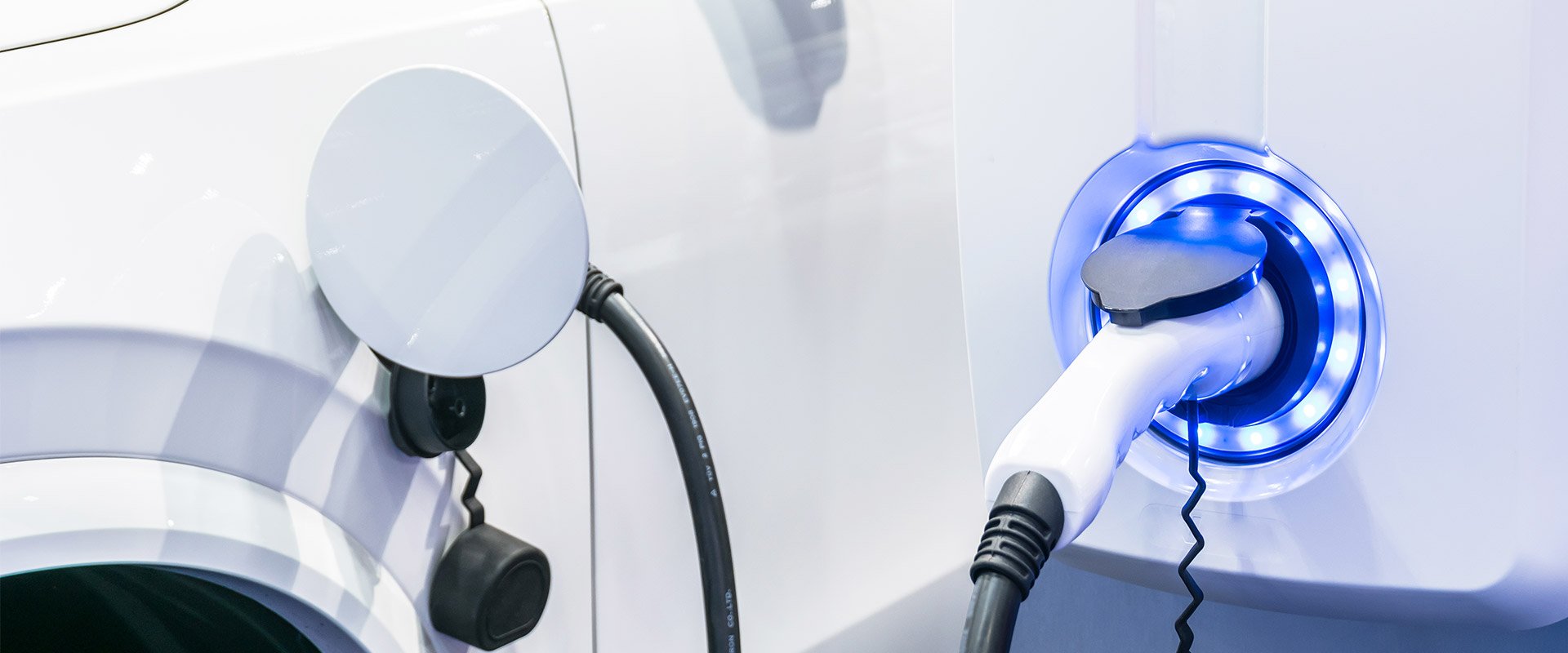
With increasing awareness around climate change, consumer demand for electric vehicles is booming - which is great news for nickel, a key component of electric vehicle batteries. According to some estimates, electric vehicles are predicted to comprise more than half of global passenger car sales by 2040. Many governments across the globe have committed to the production of electric vehicles to reduce their reliance on fossil fuels. For example, China aims to have electric vehicles account for 20 per cent of new car sales by 2025.
Nickel is the preferred metal by mass in the lithium-ion batteries that power electric vehicles. It is prized for its high energy density: an increase of nickel in the battery cathode means electric vehicles can travel for longer distances before needing to be charged. Nickel is also less expensive than lithium and cobalt (also used in electric vehicle batteries), motivating car manufacturers to increase nickel in the battery metal mix to reduce costs. Currently, nickel comprises one third of nickel manganese cobalt (NMC) cathodes and 80 per cent of nickel cobalt aluminum (NCA) cathodes. This ratio is expected to tip even further in favour of nickel, as battery formulations evolve. As a result, the popularity of nickel outstrips numerous other precious metals and materials used in electric vehicles: nickel demand is expected to increase 14 times from 2019 to 2030, beating phosphorus, iron, copper, graphite, lithium, cobalt, and manganese.

Beyond electric vehicle batteries, nickel has a wide range of applications. Historically, it was used for plating iron and brass, manufacturing alloys that retain a high silvery polish (such as German silver), and coating chemistry equipment. It was also widely used for coins, although its rising price has led to replacement by cheaper metals in recent years. One could argue that the old saying ‘a nickel ain’t worth a dime anymore’ is no longer true – in fact, it's now worth more.
Nickel is currently one of the world’s most important metal markets, at over $20 billion in size. Today, Nickel is predominantly used to produce stainless steel, which accounts for around 70 per cent of global nickel demand. It is also used to manufacture nickel-based and copper-based alloys, in electroplating, in alloy steel and in foundries. It is often combined with other metals to make strong magnets, or added to glass to give it a green appearance. Other modern-day applications include batteries, coins, armour plate and guitar strings. As a compound, nickel has a variety of niche chemical manufacturing uses, such as for pigments and metal surface treatments or as a catalyst for hydrogenation. The beauty of nickel is that it can be recycled endlessly without degradation of its properties. In fact, about 40 per cent of nickel used each year comes from recycling.

Luckily for nickel aficionados, this metal is in abundant supply across – and within – the globe. The earth’s core is thought to be made mostly of nickel and iron, and nickel occurs extensively within the earth’s crust. In fact, it is the fifth most common element on earth. Nickel is also found in meteorites – a large nickel deposit in Canada is thought be from a giant meteorite that crashed to earth thousands of years ago.
Nickel is currently mined in more than 25 countries worldwide. Nickel is commonly found in two types of ore: laterite and sulfide. With land resources of around 300 million metric tons, 60 per cent correspond to laterite deposits (predominantly South-East Asia) and 40 per cent to sulfide deposits (South Africa, Canada and Russia). Australia is the only country to boast significant quantities of both of these deposits. Nickel reserves are estimated to be 94 million metric tons, located mainly in Indonesia (22.4 per cent), Australia (21.3 per cent), Brazil (17 per cent), Russia (7.3 per cent), Cuba (5.9 per cent) and the Philippines (5.1 per cent).

While nickel is plentiful in the earth’s core and crust, can supply keep pace with the exponential surge in demand? The world’s nickel resources are currently estimated at almost 300 millions tons. While nearly 80 per cent of all nickel historically mined has been extracted over the past three decades, known nickel reserves and resources have also steadily grown. Improved technologies in mining, smelting and refining now allow lower grade nickel ore to be processed. There is also thought to be significant quantities of nickel on the deep-sea floor. According to recent estimates, more than 290 million tons of nickel are contained in manganese nodules on the ocean bed. The development of deep-sea mining technologies will open doors to harnessing these resources in the future. As with any natural resource, nickel is not unlimited, but with proper management, this recyclable metal will play a crucial role in decarbonising our world, well into the future.