Asia Shipyards Are Powering Offshore Projects Again
09 February 2026
Oil and Gas
Oil and Gas
It is easy to forget how quickly execution models change in offshore oil and gas.
A decade ago, offshore projects were still discussed largely in geographic terms. Brazil meant Brazil. West Africa meant West Africa. The assumption was that execution followed the basin. Where the asset operated was where most of the work happened.
That assumption no longer holds.
Today, a growing share of offshore projects, particularly those involving floating production and storage systems, pass through the same execution corridor regardless of where they ultimately operate. Hulls are built in China. Modules are fabricated across multiple Asian yards. Integration, completion, and early commissioning are concentrated in Singapore and nearby hubs. Only after months, sometimes years, of work in Asia do these assets head to their operating fields.
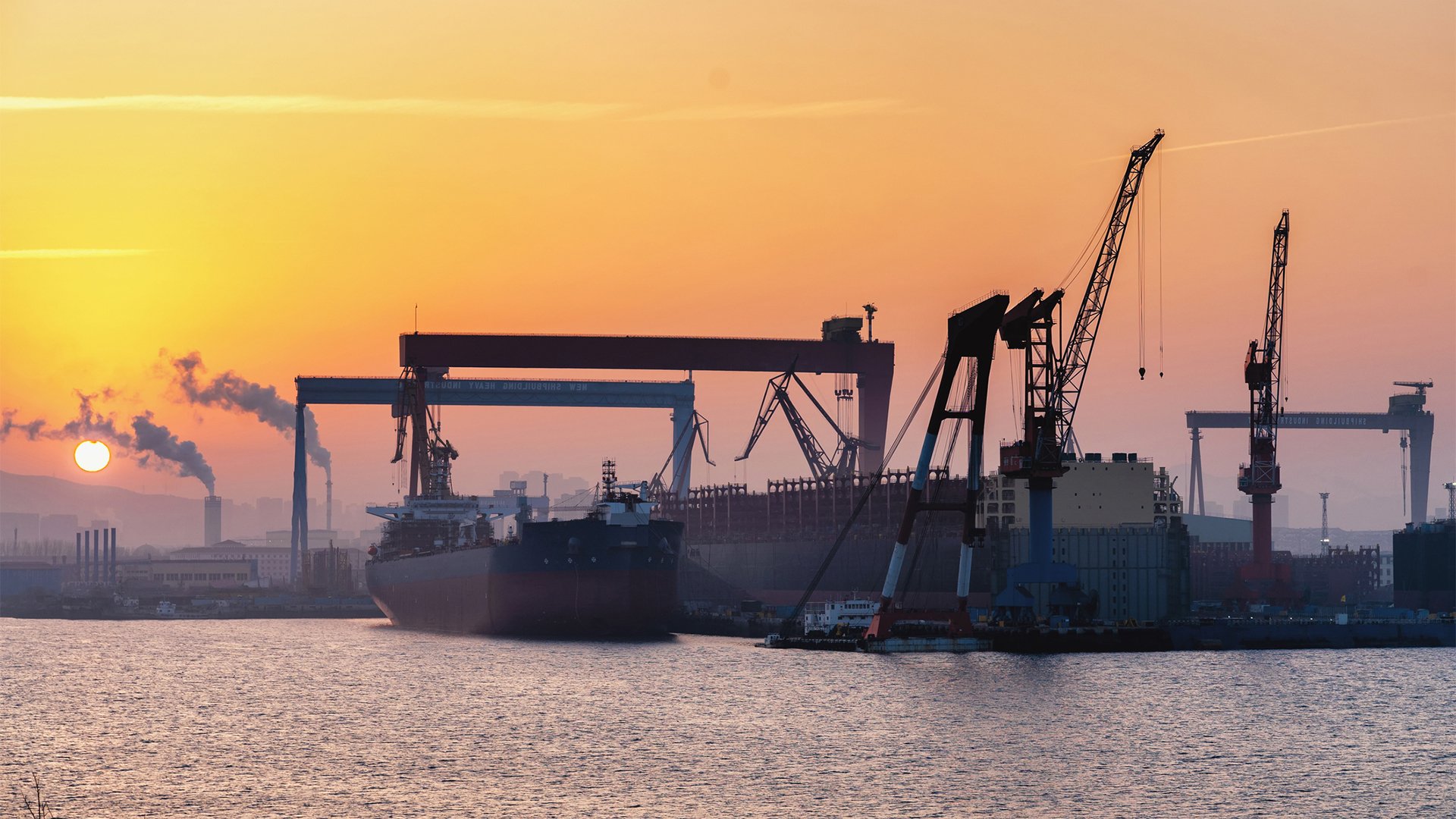
This is not a niche phenomenon, and it is not limited to a single cycle. Asia shipyards have quietly re-established themselves as a central execution hub for offshore projects, absorbing complexity across construction, conversion, integration, and life-extension work. Not because they are cheaper, but because they can deliver at scale, repeatedly, and under pressure.

Offshore activity is accelerating again. The Gulf of Mexico is moving into another production upswing. Brazil continues to rely on floating systems as the backbone of its offshore output. Guyana has built an entire offshore industry around FPSOs in less than a decade. Mexico is cautiously re-engaging offshore development after years of slowdown.
What is striking is not just the number of offshore projects progressing, but where the most execution-critical work is happening.
Singapore yards such as Seatrium have become repeat integration partners for offshore assets destined for multiple basins. Chinese shipbuilding groups including COSCO Shipping Heavy Industry and fabricators like Bomesc are now deeply embedded in offshore construction and conversion programmes, supplying hulls, modules, and large-scale structures for projects well beyond Asia.
This includes:
OECD shipbuilding data reinforces this shift. China alone accounts for close to half of global shipbuilding output by compensated gross tonnes, and when combined with South Korea and Japan, Asia dominates complex vessel construction. That dominance now extends firmly into offshore energy assets, not just commercial shipping.

It is tempting to explain this shift purely through cost, but that misses the point and underestimates the sophistication of today’s delivery decisions.
The real driver is execution certainty at scale.
Offshore operators are no longer delivering one asset at a time. They are managing portfolios: new builds, redevelopments, conversions, and life-extension projects progressing in parallel. In that environment, novelty becomes a liability. Repeatability becomes an advantage.
Operators such as ExxonMobil and Petrobras have leaned into execution models that reduce uncertainty. Standardised hull concepts. Familiar integration yards. Contractors and commissioning approaches that have already been tested under load. The objective is not to innovate for its own sake, but to compress learning curves across multiple offshore assets.
Asia shipyards are uniquely positioned to support this approach. They have the physical capacity to run multiple offshore projects simultaneously, and the organisational memory to do so without reinventing processes each time. Many Western yards, by contrast, now focus on niche scopes, brownfield modifications, or limited-run projects. When offshore portfolios scale, Asia remains one of the few regions able to absorb the volume.
Supply-chain density matters too. Asian shipbuilding hubs sit within tightly integrated networks of steel mills, equipment manufacturers, and specialist subcontractors. When schedules tighten or scopes change, proximity shortens response times. In a volatile offshore market, schedule certainty often outweighs theoretical cost savings.

For delivery teams, this has quietly changed the meaning of offshore execution.
An offshore project today rarely lives in one place. Reservoir and concept work may be led from Houston or Rio. Project management and commercial decisions are distributed across time zones. Installation and operations remain firmly anchored in the host country.
But fabrication, conversion, integration, and early commissioning have become regionalised around Asia.
It is increasingly common for offshore assets destined for the Atlantic to spend the most intense phase of their lifecycle in Asian yards. Steel is cut, modules are stacked, systems are energised and tested, and commissioning teams cycle through repeated handovers long before the unit ever reaches its operating basin.
This distributed execution model is no longer exceptional. It is normal. Search behaviour reflects it. Queries such as “FPSO construction Singapore” or “FSU conversion China” are practical questions asked by engineers, inspectors, and project managers trying to understand where work actually happens.

As Asia’s role in offshore execution has grown, one constraint has become more visible with each project cycle. It is not yard space. It is not steel. It is not even engineering capability.
It is people.
Workforce studies across offshore engineering and construction consistently point to the same pattern. Most employers report persistent hiring difficulty. The age profile of the offshore workforce skews heavily toward senior cohorts, with relatively few early-career replacements coming through. Retirements are accelerating just as offshore activity increases.
At the same time, offshore market outlooks increasingly flag skilled labour availability and yard bottlenecks in Asia as material risks to delivery. Asia’s central role does not eliminate the workforce challenge. It concentrates it.
This becomes most visible during execution peaks. Commissioning windows, mechanical completion phases, and final handovers demand highly specialised capability for short periods. Commissioning engineers, rotating equipment specialists, power systems experts, automation and ICSS professionals, experienced inspectors. These are not roles that can be scaled linearly or trained on demand.
Permanent project teams cannot simply stretch to absorb this load without consequences. Safety exposure increases. Quality suffers. Decision-making slows. Offshore delivery history is full of examples where this lesson was learned late.


The challenge is amplified by timing.
Through 2025 and into 2027, offshore execution is not unfolding as a sequence of isolated projects. It is unfolding as a stacked delivery cycle.
Before the mid-2020s, FPSOs were more often sanctioned and delivered with breathing room between programmes. Today, that gap has largely disappeared. Petrobras alone has outlined plans that would see up to eleven FPSOs deployed by 2027. Guyana continues to add capacity. The Gulf of Mexico is moving into another production upswing.
By 2026, concurrency becomes unavoidable. Multiple FPSOs across Brazil, Guyana, Mexico and the Gulf progress through construction and integration at the same time, often supported by the same Asian yards and overlapping specialist pools.
By 2027, delivery risk is no longer driven by technical novelty. It is driven by portfolio overlap. The question is not whether any single project can be built, but whether many can be delivered simultaneously without overwhelming shared resources.
This is a fundamentally different execution problem.

This is where execution partners, like Brunel, enter the picture, not as a cure for structural shortages, but as a way to keep projects moving despite them.
Organisations such as Brunel, with long-standing presence across Asia and deep involvement in offshore delivery, are typically brought in at this stage. Their role is not to promise more people than the market can supply, but to manage volatility, mobilise scarce skills and workforce across borders, and support projects through the most fragile phases of execution.
When done well, this allows core teams to stay focused on delivery while specialist capability is deployed where and when it is most needed.


Offshore oil and gas has entered a phase where success depends less on ambition and more on disciplined execution across overlapping portfolios. Asia shipyards have re-emerged at the centre of that execution, not because they are cheaper, but because they can handle scale, repetition, and complexity simultaneously across the offshore asset lifecycle, from new build FPSOs to converted FSUs and long-life offshore facilities.
As offshore projects continue to evolve through 2026 and beyond, the teams that perform best will be those that recognise this reality early, plan for it deliberately, and align their workforce and execution strategies with where delivery actually occurs.
In today’s offshore market, execution may be global in ambition, but delivery increasingly runs through Asia.
